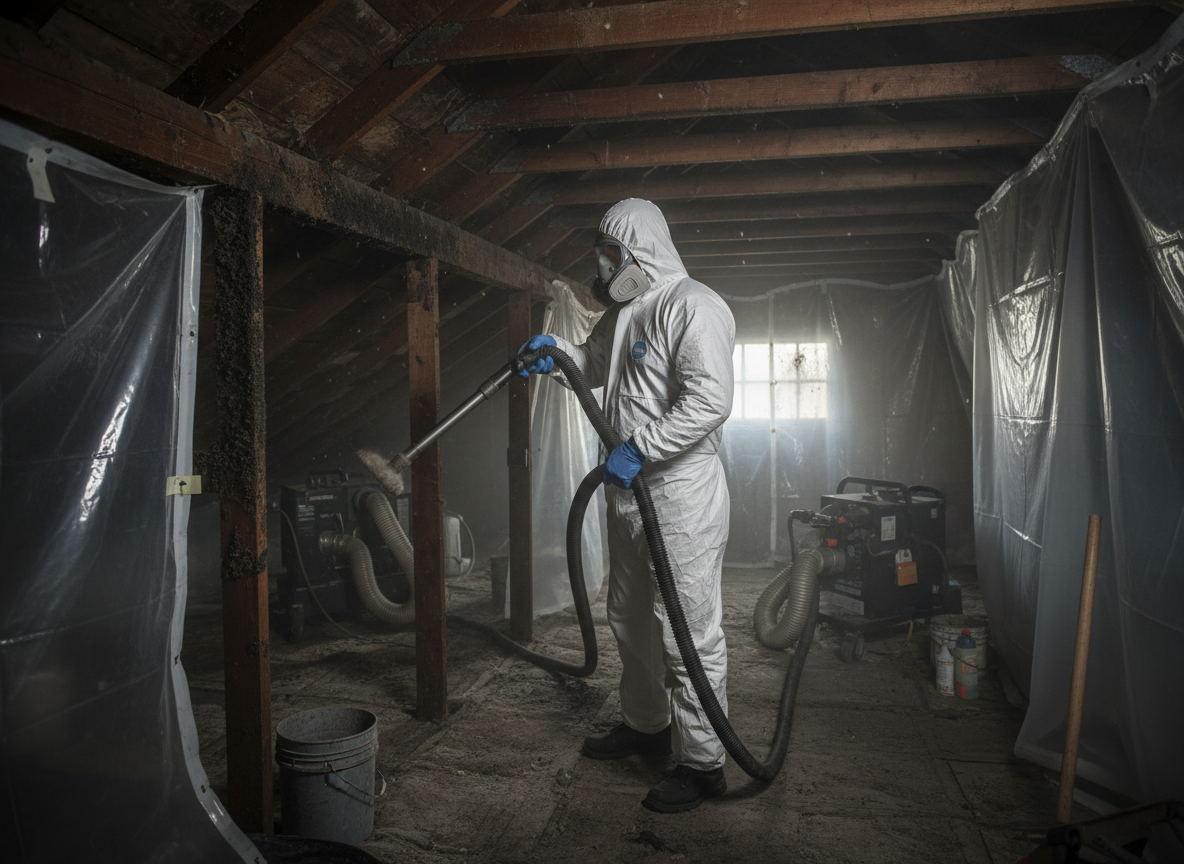
Attic mold in San Luis Rey often starts from roof leaks or poor ventilation that lets coastal moisture linger in insulation and rafters. Homes along Oceanside Blvd and surrounding streets frequently have older plywood decking and fiberglass batts that trap water long after the initial leak stops. Technicians must remove contaminated material without disturbing asbestos-containing tape or disturbing electrical runs that run through many 1960s and 1970s attics in the area.
Containment is critical because spores can drop through ceiling penetrations into living spaces below. We seal off the attic access, use negative air machines vented outside, and HEPA vacuum all surfaces before any demolition begins. In San Luis Rey properties with vaulted ceilings or spray-foam upgrades, we adjust containment methods to avoid pushing air into finished rooms.
After removal we treat remaining wood with EPA-registered antimicrobials and install temporary ventilation to dry the space before new insulation goes in. Homeowners in the San Luis Rey area should expect follow-up moisture readings for at least two weeks because afternoon marine layer humidity can re-wet framing if roof vents remain clogged with salt residue.
Final clearance includes visual inspection plus air sampling to confirm spore counts match outdoor baselines. We document every step with photos so insurance adjusters working San Diego County claims have clear records of the work performed.
Technician insight
In San Luis Rey the thing that catches most people out with attic mold remediation is how salt-laden marine air keeps older fiberglass vents clogged, so even after we fix the leak the attic never dries on its own the way inland homes do.
Hidden Mold After Roof Leak on Oceanside Blvd
A homeowner noticed ceiling stains after winter rains. Inspection found water had traveled under the ridge vent and soaked insulation across twelve feet of attic space. We contained the area, removed the wet insulation, treated the rafters, and ran drying equipment for four days until readings stabilized. Follow-up sampling confirmed spore levels matched outdoor air.
How it works
- 1
Initial Inspection and Moisture Mapping
We enter the attic from the exterior access when possible, use infrared cameras to locate hidden moisture, and test insulation and sheathing for active mold growth.
- 2
Containment and Negative Air Setup
Plastic barriers and air scrubbers isolate the work zone so spores do not migrate into living areas below the attic.
- 3
Removal of Affected Materials
Contaminated insulation, drywall, and wood are cut out and bagged for disposal while structural members are cleaned and treated.
- 4
Drying and Final Clearance
Industrial dehumidifiers and fans run until moisture levels return to normal, followed by post-remediation air sampling.
Pricing
Pricing varies with attic size, access difficulty, and amount of material that must be removed in San Luis Rey homes.