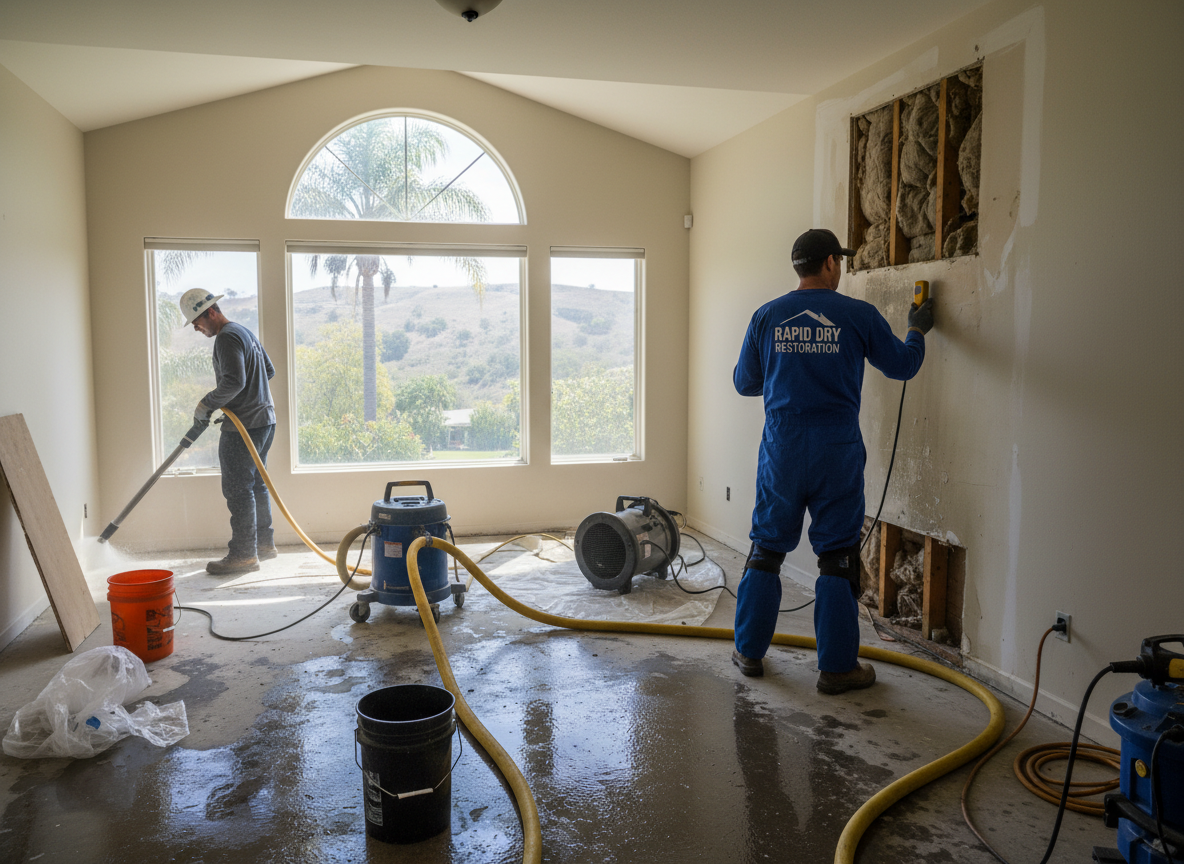
Water leaks in San Luis Rey often originate from aging galvanized or copper lines in homes built between the 1950s and 1970s. Once moisture reaches drywall or slab foundations, it travels along the coastal terrain and can affect neighboring units in older tract developments. Technicians must map the full moisture path rather than treating only the visible stain, because San Diego County building codes require documentation of hidden damage before any wall closure.
Extraction begins with negative-air machines to pull water from cavities without pushing it into adjacent rooms. In San Luis Rey’s mild winters, even small roof or window leaks can saturate insulation for weeks before homeowners notice musty odors. Drying protocols follow IICRC standards but adjust for the area’s higher humidity levels near the San Luis Rey River corridor, where ambient moisture slows evaporation and requires longer dehumidifier run times.
After drying, crews remove and replace affected baseboards and drywall sections while preserving original stucco exteriors common to local ranch-style homes. Electrical and plumbing penetrations are inspected for corrosion, because repeated leaks in these older properties frequently damage grounding wires hidden inside exterior walls.
Final verification uses moisture meters on both sides of shared walls and under cabinets, because San Luis Rey lots often sit on slight slopes that direct runoff toward foundations. Homeowners receive a written drying log that satisfies insurance adjusters working in the Oceanside and Vista markets.
Technician insight
In San Luis Rey, the thing that catches most people out with water leak restoration is how often leaks in 1960s slab homes travel under the concrete and reappear in the next room or even the neighbor’s unit because the lots slope toward the old riverbed.
Slab Leak in 1968 Ranch Home
A homeowner in San Luis Rey noticed buckling hardwood near the kitchen. Inspection revealed a pinhole leak in the original copper supply line under the slab. Crews isolated the line, extracted water from the subfloor, and dried the cavity for six days before replacing the affected flooring section.
How it works
- 1
Arrival and Containment
Technicians arrive within hours, set up containment barriers, and locate the leak source using infrared cameras and moisture meters.
- 2
Water Extraction
Standing water and saturated materials are removed with truck-mounted pumps and portable extractors to prevent further migration into slabs or framing.
- 3
Drying and Monitoring
Air movers and dehumidifiers run continuously while daily moisture readings track progress until levels return to normal for San Luis Rey construction.
- 4
Sanitation and Documentation
Antimicrobial treatment is applied where needed, followed by a complete drying report for insurance and code compliance.
Pricing
Upfront quotes provided after on-site assessment; final cost depends on square footage affected and whether slab or wall cavities require opening.