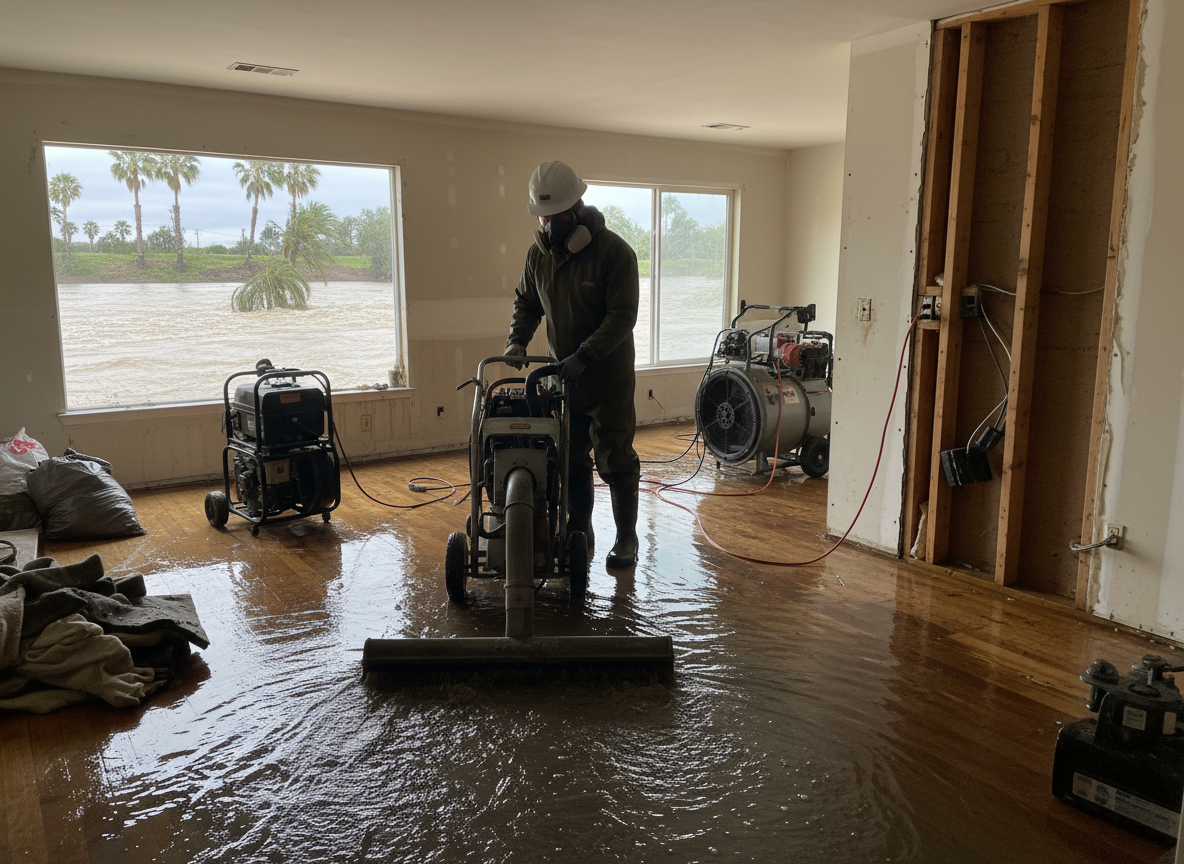
Flood restoration in San Luis Rey often involves older single-family homes built before 1980 that sit close to the San Luis Rey River corridor. These properties frequently have crawl spaces and slab foundations that trap water after seasonal rains push the river over its banks. Technicians must pull carpet, remove baseboards, and use moisture meters on drywall up to 18 inches above the water line because hidden saturation behind stucco and plaster is common. Failure to address this leads to mold growth within 48 hours in the mild coastal climate.
Extraction equipment must handle both clean river water and contaminated runoff carrying sediment from surrounding agricultural land. In San Luis Rey, crews stage dehumidifiers and air movers in tight hallways of ranch-style homes while monitoring humidity levels to prevent secondary damage to wood subfloors. Electrical panels in garages and utility rooms often sit at floor level, requiring immediate shutoff and inspection before drying begins. Homeowners who attempt their own cleanup usually miss trapped moisture under cabinets and in HVAC ducts.
San Luis Rey homes along Mission Avenue and nearby streets built on older septic systems face additional challenges when floodwater mixes with effluent. Restoration teams document every layer removed for insurance adjusters and coordinate with county permitting when structural repairs exceed basic drying. Post-flood, crews apply antimicrobial treatments only after surfaces test dry to avoid trapping moisture that later causes odor issues in the area's warm summers.
Seasonal Flood Patterns in San Luis Rey
Heavy winter rains combined with the river's natural watershed can send water into yards and crawl spaces within hours. Properties east of the riverbed see the highest frequency of calls after storms because older drainage ditches often clog with debris from surrounding hills.
Technician insight
In San Luis Rey, the thing that catches most people out with Flood restoration services is water that travels under the slab in pre-1970 homes along the river corridor. Homeowners often stop once the carpet is gone, but the real damage hides in the soil beneath the foundation where the San Luis Rey River's seasonal flow keeps the ground saturated for weeks.
River Overflow into San Luis Rey Crawl Space
Heavy winter rain pushed the San Luis Rey River over its banks and into a 1960s ranch home near Mission Avenue. Water entered the crawl space and wicked up into perimeter drywall. Crews extracted standing water, removed baseboards and lower drywall, then ran drying equipment for five days until moisture readings matched unaffected areas. Final antimicrobial treatment prevented mold in the enclosed space.
How it works
- 1
Emergency Assessment
Arrive on site within hours, locate the water source, and document all affected materials in San Luis Rey homes.
- 2
Water Extraction
Remove standing water using truck-mounted pumps and portable extractors suited for river sediment.
- 3
Drying and Dehumidification
Place industrial drying equipment and monitor moisture levels in walls, floors, and crawl spaces.
- 4
Sanitation and Treatment
Apply EPA-registered antimicrobials to prevent mold after surfaces reach dry standards.
- 5
Restoration and Repairs
Replace damaged drywall, flooring, and fixtures then coordinate with local trades for any structural fixes.
Pricing
Costs depend on water volume, affected square footage, and whether river sediment or septic contamination is present.