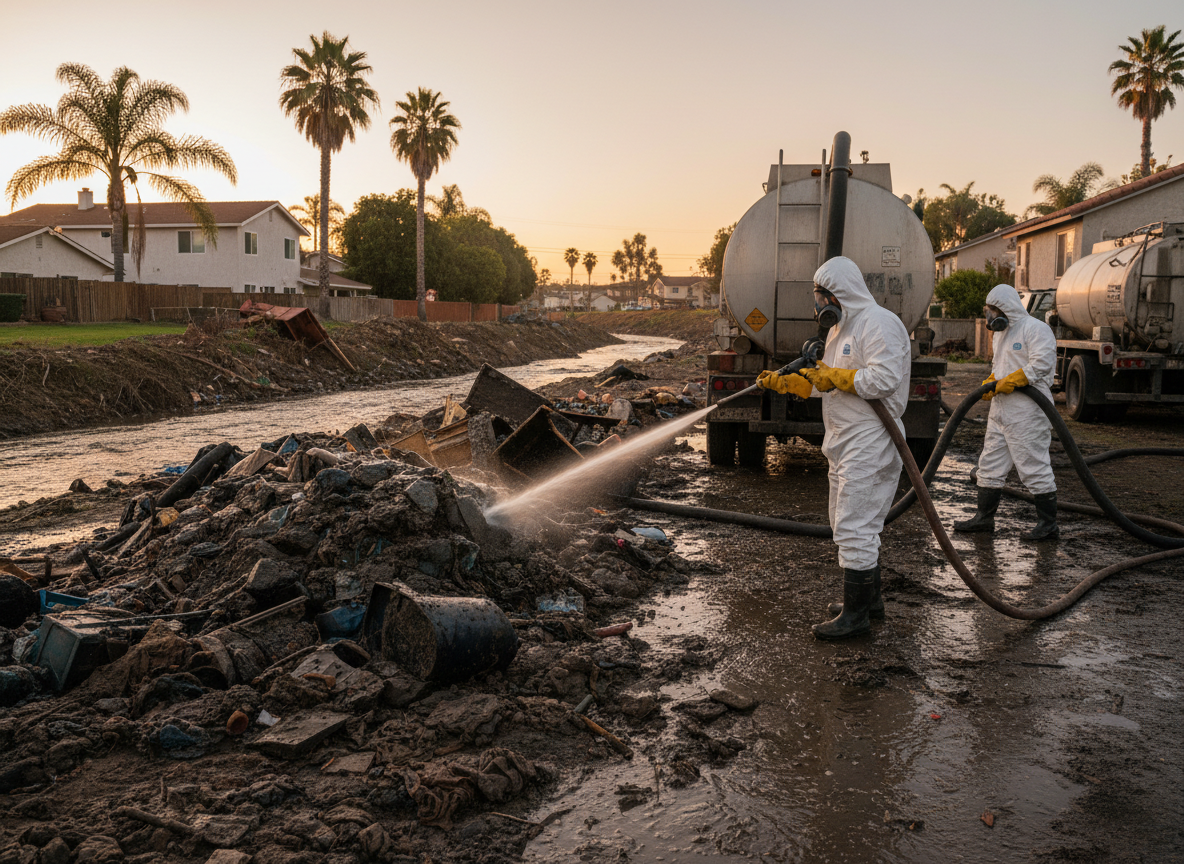
Sewage backups in San Luis Rey often involve Category 3 water carrying pathogens that require full PPE, HEPA filtration, and EPA-registered disinfectants. Crews extract standing waste first, then remove saturated drywall, carpet, and insulation up to the contamination line. Hidden pockets in slab homes common along Oceanside Boulevard and nearby streets can hold moisture for weeks if not opened and dried with commercial air movers and dehumidifiers.
San Diego County health codes require documentation of all removed materials and proof of proper disposal at approved facilities. Technicians test for cross-contamination into HVAC systems or adjacent rooms before clearance. In older housing stock built before the 1990s, cast-iron or clay pipes frequently fail at joints, allowing repeat backups when heavy winter rains overload the municipal lines near the San Luis Rey River corridor.
Homeowners sometimes attempt DIY enzyme cleaners that mask odors without killing bacteria, leading to long-term mold growth behind baseboards. Professional protocols include post-treatment air sampling and moisture mapping with infrared cameras to confirm every wall cavity and subfloor reaches safe levels before reconstruction begins.
Technician insight
In San Luis Rey, the thing that catches most people out with sewage cleanup is the combination of pre-1980s homes with clay sewer laterals and the way our winter rains push roots into those lines near the riverbed. Homeowners often stop at visible floor cleanup and miss the moisture that travels under the slab or into shared walls with neighbors.
San Luis Rey Kitchen Backup
A homeowner on Mission Avenue called after a toilet overflow sent waste into the kitchen. We found the clog originated from an old clay lateral shared with the street main. After extraction and removal of the lower cabinets and flooring, we disinfected, dried the subfloor, and verified no migration into the adjacent laundry room.
How it works
- 1
Emergency Assessment
Arrive on site, identify the source, and map the full extent of contamination using moisture meters.
- 2
Containment and Extraction
Set up physical barriers and remove all standing sewage and grossly contaminated materials.
- 3
Cleaning and Disinfection
Apply EPA-approved antimicrobials to all affected surfaces and treat HVAC if impacted.
- 4
Drying and Verification
Deploy drying equipment, then confirm dryness with meters and provide written clearance.
Pricing
Upfront quotes based on affected square footage and materials; no hidden fees after initial inspection.