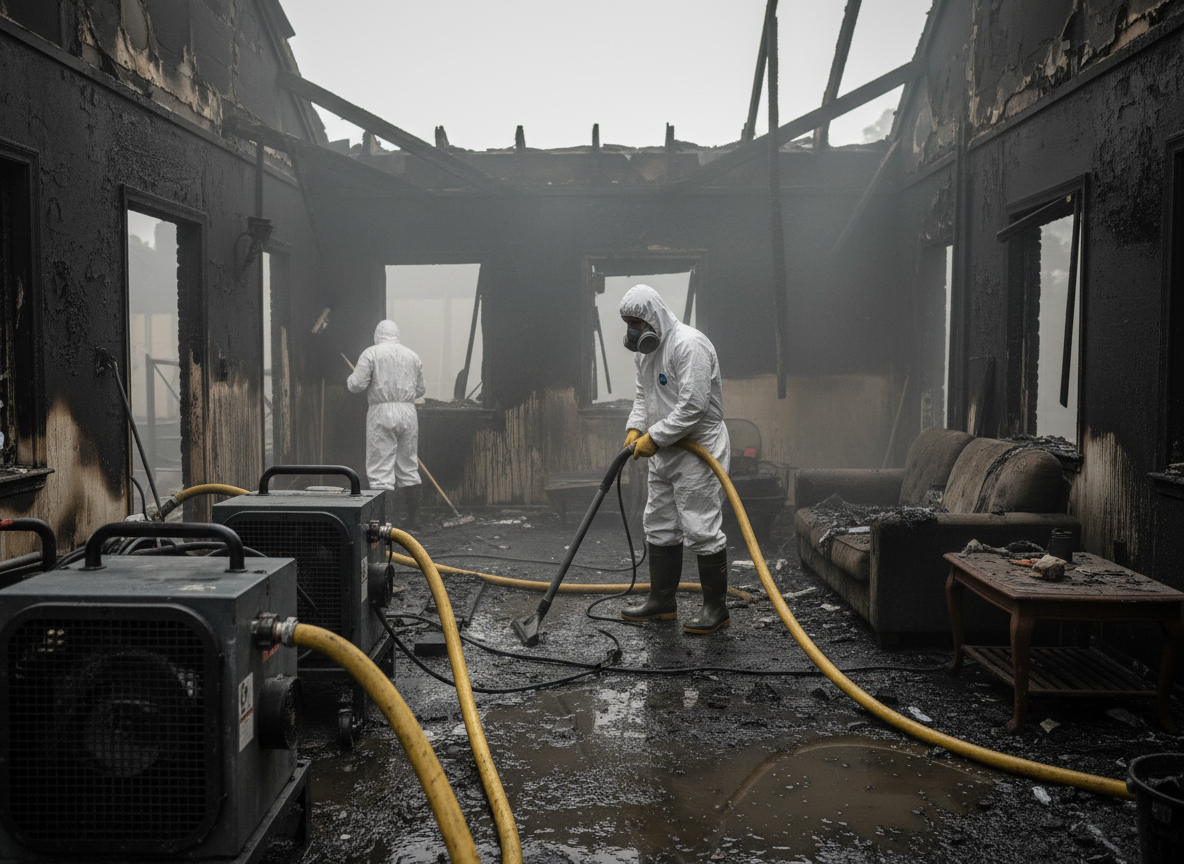
Firefighting in San Luis Rey often involves high-volume water application that soaks into older stucco and wood-frame homes common along Oceanside Blvd and nearby neighborhoods. This water mixes with acidic soot from burned materials, creating corrosion risks on metal fixtures, electrical boxes and HVAC components if not extracted within hours. Crews must separate clean water zones from contaminated areas to prevent cross-tracking soot into unaffected rooms.
San Luis Rey's dry climate followed by sudden winter rains can drive hidden moisture deeper into slab foundations or crawl spaces typical of 1960s-1980s housing stock. Technicians use moisture meters and thermal imaging to locate water behind drywall and under cabinets before mold sets in. Failure to remove baseboards and drill weep holes allows residual dampness to migrate upward, damaging interior finishes weeks after the initial event.
Local building practices in the San Luis Rey area frequently include lath-and-plaster walls that retain water longer than modern drywall. Remediation requires careful demolition to avoid disturbing load-bearing elements while documenting all removed materials for insurance. Air movers and dehumidifiers must run continuously because coastal humidity slows evaporation rates compared to inland San Diego County zones.
After fire suppression, secondary water damage often appears in attics where insulation traps moisture against roof sheathing. In San Luis Rey homes with composition shingles, crews inspect for delamination caused by standing water before reinstalling. Proper disposal of contaminated insulation and carpet padding prevents odors from returning once the structure dries.
Technician insight
In San Luis Rey, the thing that catches most people out with water damage remediation after fire is how quickly suppression water travels under the slab in the older ranch homes along Oceanside Blvd. Once it reaches the soil beneath, drying takes far longer than interior walls and homeowners often miss the odor returning during the next rain.
Hidden Moisture in Stucco Wall
A kitchen fire in a San Luis Rey home sent water through exterior stucco into the wall cavity. Inspection revealed moisture had wicked upward behind baseboards. Crews opened the wall, extracted water and ran drying equipment for five days until readings normalized, preventing mold growth before reinstallation.
How it works
- 1
Initial Assessment
Technicians arrive within hours, document all affected rooms and test moisture levels in walls, floors and ceilings.
- 2
Water Extraction
Portable pumps and wands remove standing water from carpets, hardwood and tile while isolating soot-contaminated zones.
- 3
Structural Drying
Air movers, dehumidifiers and heaters run until moisture readings return to normal, with daily monitoring in San Luis Rey humidity.
- 4
Soot and Residue Removal
HEPA vacuums and specialized cleaners address acidic deposits on surfaces before odors embed in porous materials.
- 5
Final Verification
Post-drying inspection confirms no hidden moisture remains and provides documentation for insurance claims.
Pricing
Upfront quotes provided after on-site inspection; final cost depends on water volume, affected square footage and materials requiring removal.